

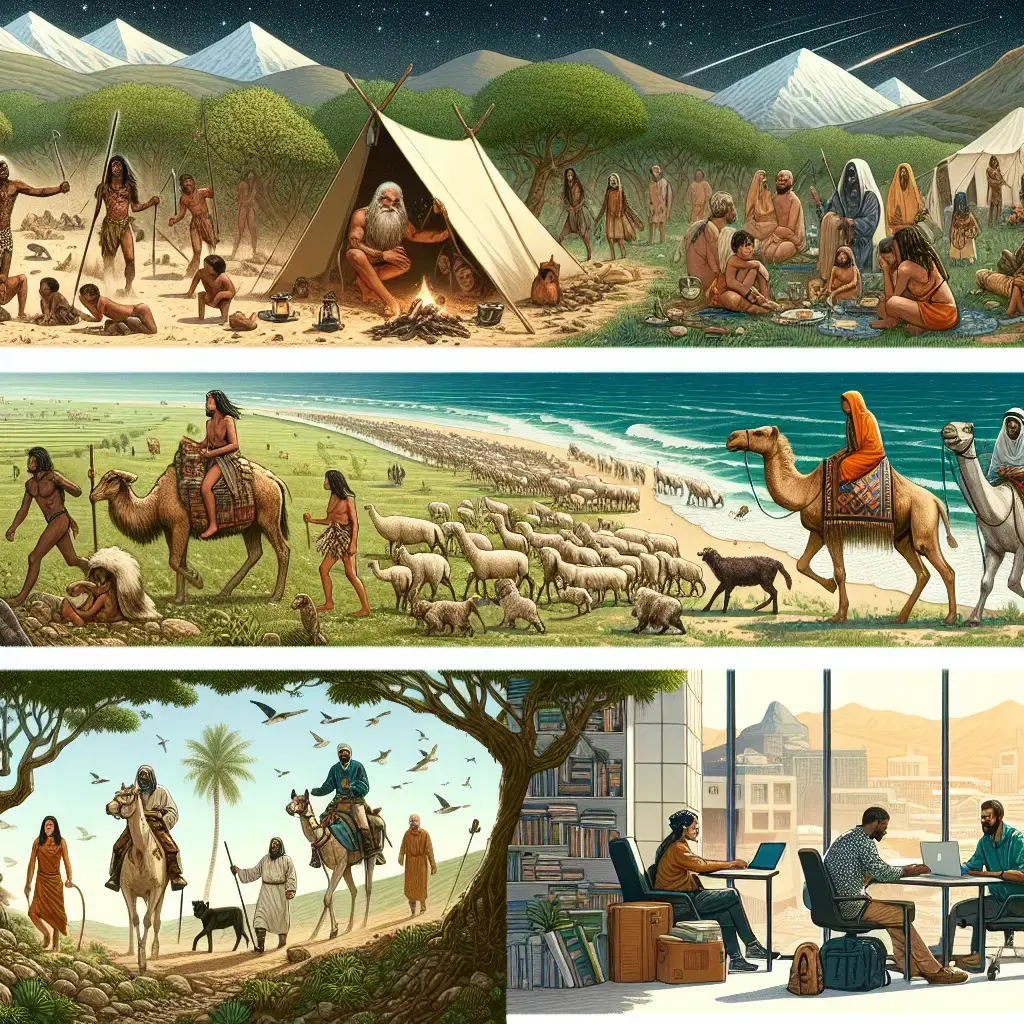
Throughout history, nomadic cultures have carved a unique niche in the tapestry of human civilization, showcasing an incredible evolution over the millennia. From ancient societies that roamed vast landscapes to modern communities adapting to contemporary challenges, nomadic cultures have continually reshaped and redefined human existence. The history of nomadic tribes offers a fascinating glimpse into how nomadism has influenced cultural evolution and societal structures globally.
The adaptability and survival instincts of early human societies underpin the history of nomadic tribes. Ancient nomadic societies thrived as they migrated across vast landscapes, driven by resource availability and environmental demands. Hunter-gatherer societies, such as those from the Paleolithic era, exemplify the earliest forms of nomadic existence. These communities relied on the land for sustenance, moving with nature's rhythms to hunt game and gather edible plants. The cultural evolution of nomads during this period laid the foundation for complex social structures and inter-tribal exchanges.
As human societies evolved, so did their methods of subsistence. The development of pastoral nomadism marked a significant shift in lifestyle changes for these cultures. Pastoral nomads managed herds of domesticated animals, migrating to find pastures and water sources. This adaptation not only sustained communities but also contributed to intricate migration patterns.
For instance, the Scythians and other Central Asian tribes are renowned for their mastery of horse breeding and mounted warfare, facilitating expansive migrations and cultural exchanges. These ancient practices underscore how innovations influenced trade routes and technological advancements, such as spreading ironworking skills across continents (Source: National Geographic).
The enduring nomadic heritage is evident in traditional practices that continue to influence modern life. The Mongols, for example, exemplify how nomadic cultures left an indelible mark on history through their conquests and administration under leaders like Genghis Khan. Their ability to maintain vast empires was rooted in traditional practices emphasizing mobility, adaptability, and strategic alliances.
Nomadism Through History: A Catalyst for Cultural Exchange
Modern anthropological research reveals that these practices have shaped societal structures and cultural exchanges across regions. Kurt Hollander's book project on violence in Colombia discusses how mobility and resource access have historically influenced community dynamics (Source: Cali Caliente Interview). By examining these connections, we gain valuable insights into how traditional practices resonate today.
Nomadism has served as a catalyst for cultural exchange and societal growth throughout history. The Silk Road, one of history's most iconic trade routes, was facilitated by nomadic tribes acting as intermediaries between distant civilizations. These tribes not only transported goods but also facilitated exchanges in ideas, technology, and beliefs.
The impact of nomadism is further illustrated by the Bedouins of the Arabian Peninsula. Their innovations in navigation and survival techniques have historically influenced the region's cultural landscape. As modern technologies intersect with traditional knowledge, these communities face challenges and opportunities in preserving their heritage while adapting to contemporary contexts (Source: BBC News).
In today's rapidly changing world, modern nomadic communities continue to navigate unique challenges and opportunities. From digital nomads embracing a technology-driven lifestyle to indigenous groups preserving ancestral lands, mobility remains a defining characteristic of these cultures. However, globalization, climate change, and geopolitical factors present hurdles and prospects for these resilient societies.
Modern Nomadic Communities: Challenges and Opportunities
For instance, climate change poses significant threats to traditional lifestyles reliant on predictable environmental patterns. The Arctic's Indigenous peoples, like the Sámi, face challenges as melting ice disrupts reindeer herding routes (Source: World Wildlife Fund). Conversely, digital nomads leverage technology to create flexible work environments transcending geographic boundaries, highlighting how modern adaptations mirror ancient practices in new contexts (Source: Forbes).
Despite the challenges faced by modern nomadic communities, the enduring legacy of nomadism continues to inspire lessons in sustainability and adaptability. As we explore their remarkable journey from ancient roots to modern adaptations, we uncover the vibrant future that defines these captivating societies.
Nomadic cultures remind us that mobility, community, and culture intertwine to create resilient societies capable of thriving amidst change. By understanding their evolution through history, we gain valuable perspectives on how these dynamic cultures have shaped—and continue to influence—the global cultural mosaic.
Nomadic cultures have profoundly influenced human history, demonstrating resilience, adaptability, and innovation. Their evolution provides key insights into the dynamic interplay between mobility, culture, and societal development:
- Ancient Nomadic Societies laid the groundwork for complex social structures through adaptive lifestyles.
- Pastoral Nomadism involved managing domesticated animals, fostering cultural interactions.
- Traditional Practices have shaped empires and societal structures while resonating today.
- Cultural Exchange was facilitated by tribes acting as intermediaries along trade routes like the Silk Road.
- Modern Challenges include balancing traditional practices with innovations like digital nomadism.
Despite globalization and climate change pressures, nomadism's legacy offers lessons in sustainability and adaptability. Their journey from ancient roots to contemporary adaptations highlights these vibrant societies' enduring relevance.
Reflecting on these insights reminds us of mobility, community, and culture's intertwined nature in creating resilient societies. Lessons from nomadic cultures can inform our approaches to contemporary challenges, prompting us to consider supporting these communities in preserving their rich heritage while embracing new opportunities.
We invite you to share your experiences or thoughts on this topic. How can nomadism's legacy inspire solutions to today's global issues? Join the conversation and explore resources such as National Geographic or BBC News for more insights into the ongoing journey of nomadic cultures.

Leave a Comment